


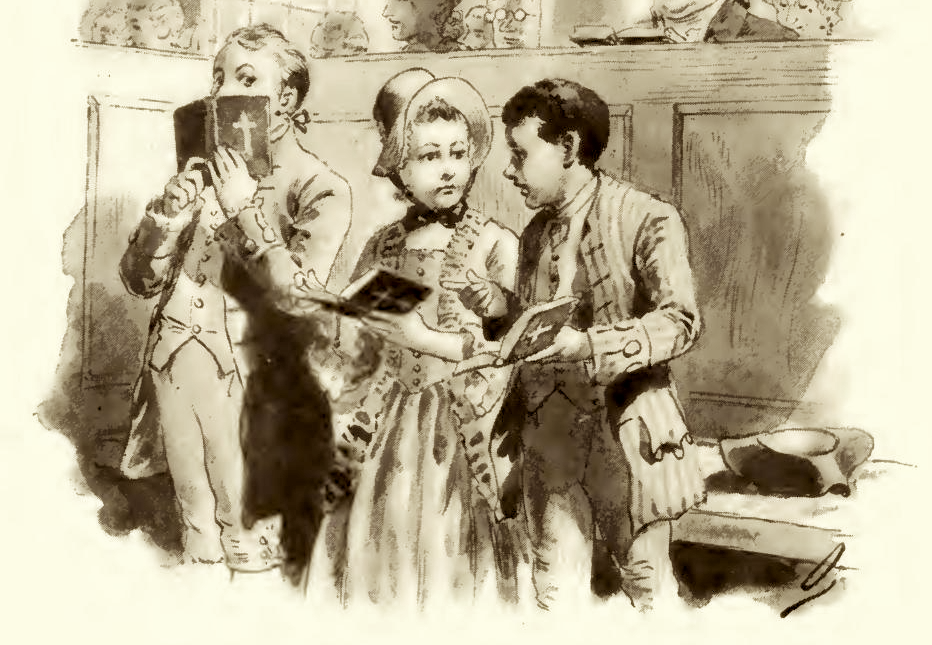
Homily by the Venerable Bede, Priest at Jarrow.
“The same thing which the Lord showed in a figure by cursing the barren fig-tree (Mark 11:12-25, Douay-Rheims), He afterwards more plainly put before us by casting the desecrators out of the temple. The tree herself had not sinned by bearing no fruit when the Lord was hungry, for the time of figs was not yet come, but those Priests had sinned who were carrying on worldly business in the Lord’s house, and who neglected to bring forth that fruit of godliness which they owed, and which the Lord was hungry to find in them. The Lord made the fig-tree to wither away under His curse, that all men who saw it, and all men who hear of it, might know that they will be condemned by the judgment of God, if they content themselves with the talk of godliness, without the solid fruit of good works, even as that barren fig tree was clothed only with a rustling garb of green leaves.
But because the buyers and sellers understood not the parable of the barren fig-tree, the Lord brought upon them the stroke of the punishment that they had deserved, and cast out the traffickers in earthly things, from that house, wherein it had been commanded that nothing should be done save the work of God, sacrifices and prayers offered up to Him, and His word read, taught, and sung. And yet it may be believed that nothing was being sold or bought in the temple save such things as were needful for the service thereof, as we read in another place, John ii. 14, that when Jesus went into the temple He found those that sold oxen and sheep and doves, and all these things were doubtless there for no other end but to be offered to God in that His holy house, and were sold by the natives to those worshippers who came from a distance, to be so used.
If, therefore, the Lord would not have to be sold in the temple, even such things as He willed should be offered therein, (On account, that is, of the greed or dishonesty which is often the stain of such transactions,) with what anger, suppose ye, would He visit such as He might find laughing or gossiping there, or yielding to any other sin. If the Lord suffer not to be carried on in His house such worldly business as may be freely done elsewhere, how much more shall such things as ought never to be done anywhere, draw down the anger of God if they be done in His own holy house Lastly the Holy Ghost came down upon the Lord in the shape of a dove, and by doves therefore may be signified the gifts of that Holy Spirit. They, then, to this day sell doves in the temple of God, who take money in the Church for the laying on of their hands, whereby the Holy Ghost is given from heaven.”
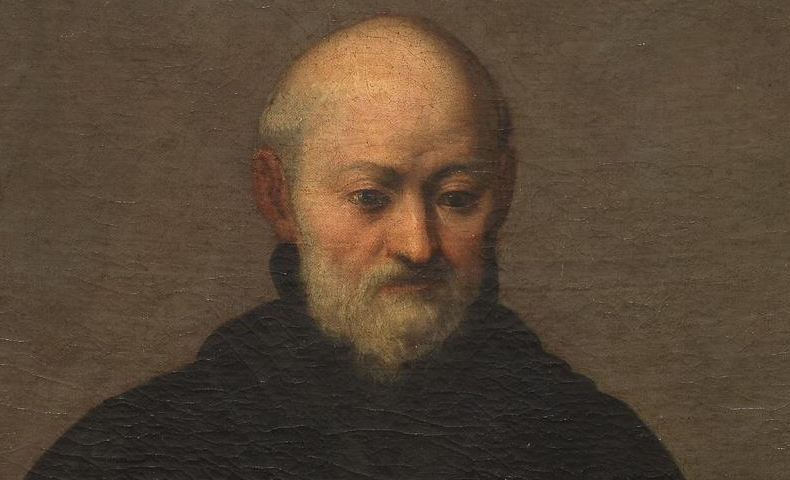
San Beda | Bartolomé Román
Saint Bede the Venerable’s Story
Bede is one of the few saints honored as such even during his lifetime. His writings were filled with such faith and learning that even while he was still alive, a Church council ordered them to be read publicly in the churches.
At an early age, Bede was entrusted to the care of the abbot of the Monastery of St. Paul, Jarrow. The happy combination of genius and the instruction of scholarly, saintly monks, produced a saint and an extraordinary scholar, perhaps the most outstanding one of his day. He was deeply versed in all the sciences of his times: natural philosophy, the philosophical principles of Aristotle, astronomy, arithmetic, grammar, ecclesiastical history, the lives of the saints and especially, holy Scripture.
From the time of his ordination to the priesthood at 30—he had been ordained a deacon at 19—till his death, Bede was ever occupied with learning, writing, and teaching. Besides the many books that he copied, he composed 45 of his own, including 30 commentaries on books of the Bible.
His Ecclesiastical History of the English People is commonly regarded as of decisive importance in the art and science of writing history. A unique era was coming to an end at the time of Bede’s death: It had fulfilled its purpose of preparing Western Christianity to assimilate the non-Roman barbarian North. Bede recognized the opening to a new day in the life of the Church even as it was happening.
Although eagerly sought by kings and other notables, even Pope Sergius, Bede managed to remain in his own monastery until his death. Only once did he leave for a few months in order to teach in the school of the archbishop of York. Bede died in 735 praying his favorite prayer: “Glory be to the Father, and to the Son, and to the Holy Spirit. As in the beginning, so now, and forever.”
Historian and Doctor of the Church, born 672 or 673; died 735. His words, written in 731, when death was not far off, not only show a simplicity and piety characteristic of the man, but they throw a light on the composition of the work through which he is best remembered by the world at large. He writes:
Thus much concerning the ecclesiastical history of Britain, and especially of the race of the English, I, Baeda, a servant of Christ and a priest of the monastery of the blessed apostles St. Peter and St. Paul, which is at Wearmouth and at Jarrow (in Northumberland), have with the Lord’s help composed so far as I could gather it either from ancient documents or from the traditions of the elders, or from my own knowledge. I was born in the territory of the said monastery, and at the age of seven I was, by the care of my relations, given to the most reverend Abbot Benedict [St. Benedict Biscop], and afterwards to Ceolfrid, to be educated. From that time I have spent the whole of my life within that monastery, devoting all my pains to the study of the Scriptures, and amid the observance of monastic discipline and the daily charge of singing in the Church, it has been ever my delight to learn or teach or write. In my nineteenth year I was admitted to the diaconate, in my thirtieth to the priesthood, both by the hands of the most reverend Bishop John [St. John of Beverley], and at the bidding of Abbot Ceolfrid. From the time of my admission to the priesthood to my present fifty-ninth year, I have endeavored for my own use and that of my brethren, to make brief notes upon the holy Scripture, either out of the works of the venerable Fathers or in conformity with their meaning and interpretation.
After this Bede inserts a list or Indiculus, of his previous writings and finally concludes his great work with the following words:
“And I pray thee, loving Jesus, that as Thou hast graciously given me to drink in with delight the words of Thy knowledge, so Thou wouldst mercifully grant me to attain one day to Thee, the fountain of all wisdom and to appear forever before Thy face.”
Source:
Franciscan Media. “Saint Bede the Venerable.” Franciscan Media, February 28, 2023, http://www.franciscanmedia.org/saint-of-the-day/saint-bede-the-venerable.
Thurston, H. (1907). The Venerable Bede. In The Catholic Encyclopedia. New York: Robert Appleton Company. Retrieved February 28, 2023 from New Advent: http://www.newadvent.org/cathen/02384a.htm

BOOKS
The Real Presence – Fr. Buckley FSSP
The Blessed Eucharist: Our Greatest Treasure – Fr. Michael Mueller
EXPLORE
Affirmation of Faith
St. Paschal Baylon, Seraph of The Eucharist
About
The Experiment
International Crusade of Eucharistic Reparation
The Eucharistic Fast & Law of Abstinence
Reception on the Tongue, Kneeling
Received and Not Owed
Behavior in Church
Communion Bread Making
Thoughts on the New Rite of Mass
Spiritual Communion
Quas Primas
Pange Lingua
Contact
Send Prayer Request
©2026 REALPRESENCE.INFO.
 THE REAL PRESENCE