
CHAPTER I
“The Catholic Church believes…”
CHAPTER II
“From the testimony of the Fathers…”
CHAPTER III
“Not only the witness…”
CHAPTER IV
“The denial of the change…”
CHAPTER V
“In the august mystery…”
CHAPTER VI
“The devotional prayers…”
CHAPTER II
FROM the testimony of the Fathers of the Church, the texts of the most ancient liturgies and even from the witness of the Orthodox churches there is evidence that the doctrine of the Real Presence which Trent solemnized is the teaching that has been handed down and received from the beginning of Christianity. The doctrines of the Reformers, by contrast, are novelties which spring up in the sixteenth century.
The Fathers
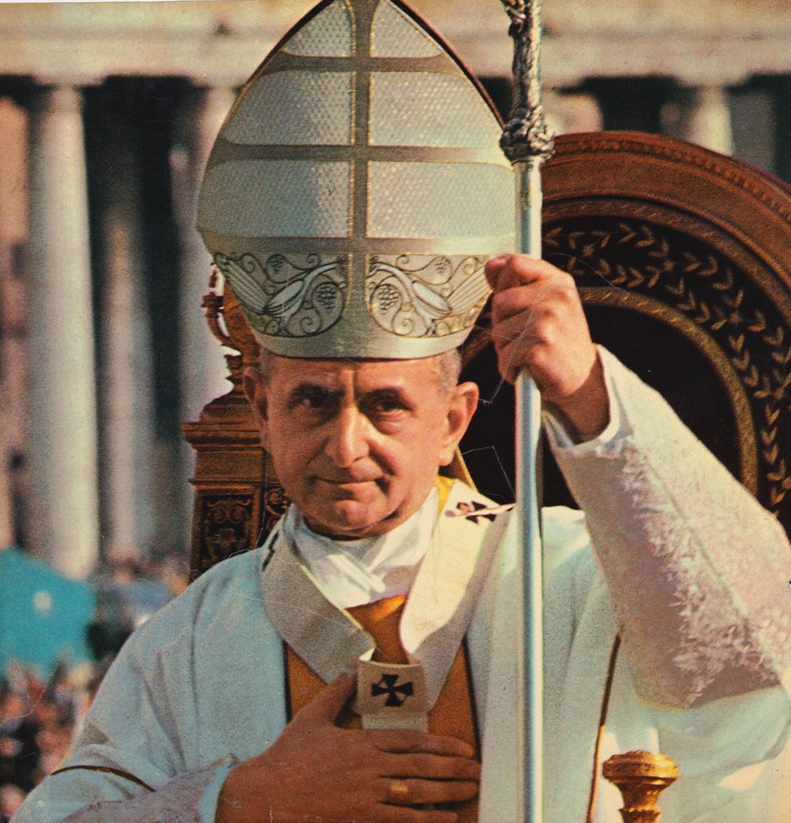
Pope Paul VI in his 1965 Encyclical Mysterium Fidei wrote “…the Fathers felt they had a solemn duty toward the faithful that, in reflecting upon this most sacred Sacrament, they should not pay attention to the senses, which report only the properties of bread and wine, but rather to the words of Christ, which have power great enough to change, transform, ‘transelementize’ the bread and wine into His body and blood. As a matter of fact, as the same Fathers point out on more than one occasion, the power that does this is the same power of Almighty God that created the whole universe out of nothing at the beginning of time.” The Sovereign Pontiff then provided the following quotes from four Fathers of the Church:
- “Instructed as you are in these matters and filled with an unshakable faith that what seems to be bread is not bread—though it tastes like it—but rather the Body of Christ; and that what seems to be wine is not wine—even though it too tastes like it—but rather the Blood of Christ…draw strength from receiving this bread spiritual food and your soul will rejoice.” (St. Cyril of Jerusalem from his Catechesis, a fourth century work)
- “It is not man who makes what is put before him the Body and Blood of Christ, but Christ Himself who was crucified for us. The priest standing there in the place of Christ says these words, but their power and grace are from God. This is my Body, he says, and these words transform what lies before him.” (St. John Chrysostom from his Homily on the Betrayal of Judas fourth century)
- “He said This is My Body and this is My Blood in a demonstrative fashion, so that you might not judge that what you see is a mere figure; instead the offerings are truly changed by the hidden power of God Almighty into Christ’s body and blood, which bring us the life-giving and sanctifying power of Christ when we share in them.” (St. Cyril of Alexandria from “On Matthew,” fifth century)
- “Let us be assured that this is not what nature formed but what the blessing has consecrated; and there is greater power in the blessing than in nature, since nature itself is changed through the blessing… Surely the word of Christ, who could make something that did not exist out of nothing, can change things that do exist into something they were not before. For it is no less extraordinary to give new natures to things than it is to change nature.” (St. Ambrose. “On Mysteries,” fourth century)
Quotes from earlier documents establish the same teaching.
In a third century letter to Sixtus II, Dionysius of Alexandria describes how “one of the faithful stands before the sacred table and stretches his hand to take the holy food and when he receives it becomes a partaker of the body and blood of our Lord Jesus Christ.” (cf. Pesch, De Sacramentis…de Eucharistia, ed Frib. 1914 n. 616)
St. Cyprian, the bishop of Carthage who was martyred in 258, severely rebuked lapsed who before doing penance dared to approach the Holy Eucharist. He said, “Before placating an offense against the indignant and threatening Lord, they violate His body and blood and sin against the Lord more by their mouth and hands than when they denied Him.” (De Lapis, 16)

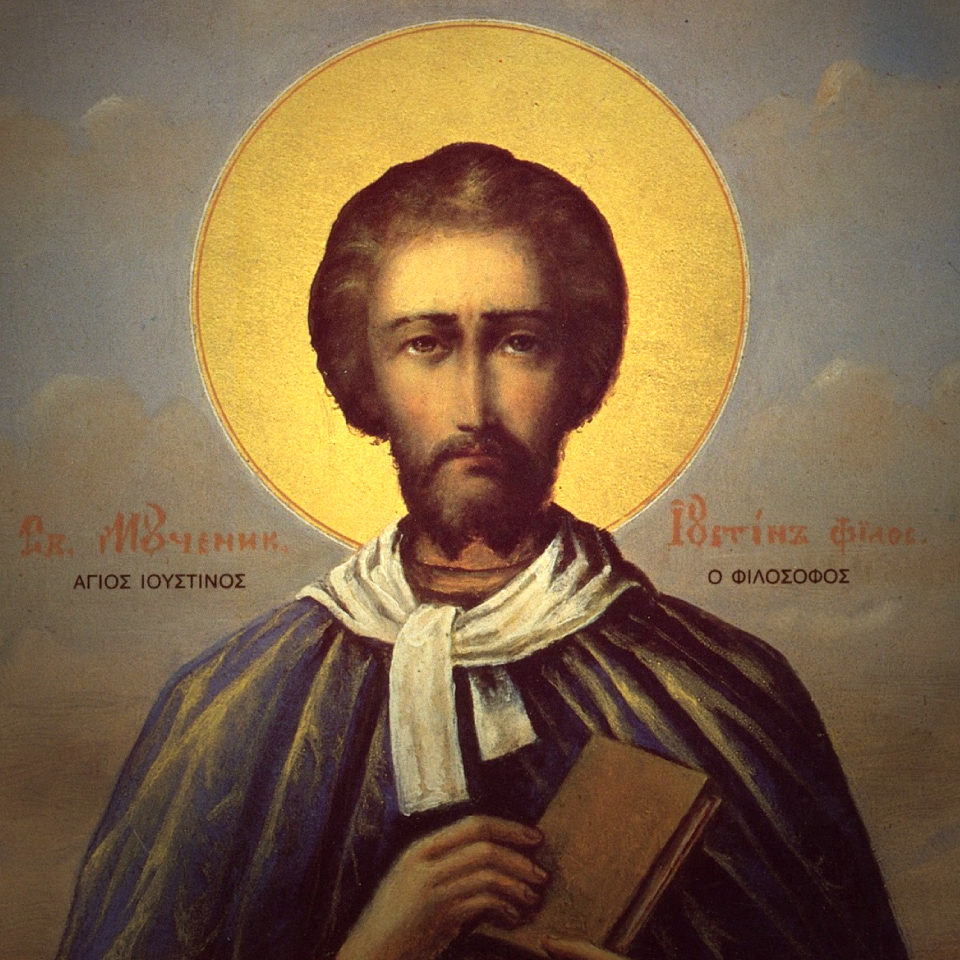
In his Apologia to the emperor Antoninus, St. Justin, who was martyred in 168, describes the liturgy, declaring that this food cannot be received except by the baptized faithful. He adds: “What we receive is not common bread and common drink; we have been taught that it is the flesh and blood of the Incarnate Jesus.” He says that as the Word truly became man in the Incarnation, so the bread and wine, through the prayer containing Christ’s words, truly become the body and blood of Christ. (Cf. St. Justin Martyr’s Apologia I, 66)
It is remarkable that at so early a date there is such a clear expression of Catholic teaching because of the “Discipline of the Secret.” As Arthur S. Barnes explains, this was a custom in the earliest ages of the Church “by which the knowledge of the more intimate mysteries of the Christian religion was carefully kept from the heathen and even from those who were undergoing instruction in the Faith” (“Discipline of the Secret,” Catholic Encyclopedia of 1909. Vol. V, p. 32). An example of this discipline is the reference to the Eucharist found in “Didache” or “Teaching of the Twelve,” a late first century writing. It states: “Thou, Almighty Master, didst create all things for Thy name’s sake, and didst give food and drink unto men for enjoyment, that they might render thanks to Thee, but didst bestow upon us spiritual food and drink and eternal life through Thy Son.”
LITURGIES
All the ancient liturgies, whether East or West, clearly preach or evidently suppose the truth of the Real Presence. For the sake of brevity, two examples will be presented.
Book VIII of the Apostolic Constitutions is a fourth century liturgical document compiled by a Syrian living near Antioch. It says: “We beseech You, that you may look with favor over these gifts placed in Your sight…and that you may send your Holy spirit upon this sacrifice…that this bread may become the body of Your Christ and this chalice may become the blood of Your Christ.” Afterwards, it continues: “Let the bishop indeed distribute what has been offered, saying ‘The body of Christ’; and let the one who receives respond: Amen. Let the deacon hold the chalice and say when distributing: ‘the blood of Christ, the chalice of life’, and let him who drinks respond: Amen.” At the conclusion of the ceremony, it directs: “let the deacon announce: Let us give thanks for having received the precious body and blood of Christ.” (Manuale Theologiae Dogmaticae by J. M. Hervé, Vol. 4, p. 39)
The sacramentary of Serapion, a fourth century Egyptian, has the following prayer: “O God of truth, let your holy Word come upon this bread that it become the body of the Word, and over this chalice that it become the blood of Truth.” After the communion, there is added: “We give you thanks because you have given us the communion of the body and the blood.” (Ibid, p.4)
THE ORTHODOX
Clear evidence that these groups, which separated themselves from Rome in the eleventh century, nevertheless retain the same teaching on the Real Presence as does the Catholic Church can be found in “The Confession of Dositheus.” The two paragraphs of this document pertinent to our topic are found on page 150 of Father John Hardon’s Religions of the World, Volume Two:
“We Believe that the substance of bread and wine remain no longer, but the very Body and Blood of the Lord, under the form and figures of bread and wine, that is under the accidents. Also that under every part or smallest bit of bread and wine there is not a part of the Lord’s Body, but the entire whole Lord Christ according to His substance: that is with the soul and divinity as He is perfect God and perfect Man.
“So that although the be many Eucharists celebrated in the world at one and the same hour, there are not many Christs or many bodies of Christ, but one and the same Christ is present in all and every Church of the faithful, and there is one Body and Blood. Not that the Body of the Lord which is in heaven descends upon the altar; but because that Bread which is laid on the altar, and there offered in every Church, is by consecration changed and transubstantiated and made one and the same with that which is in heaven.”

BOOKS
The Real Presence – Fr. Buckley FSSP
The Blessed Eucharist: Our Greatest Treasure – Fr. Michael Mueller
EXPLORE
Affirmation of Faith
St. Paschal Baylon, Seraph of The Eucharist
About
The Experiment
International Crusade of Eucharistic Reparation
The Eucharistic Fast & Law of Abstinence
Reception on the Tongue, Kneeling
Received and Not Owed
Behavior in Church
Communion Bread Making
Thoughts on the New Rite of Mass
Spiritual Communion
Quas Primas
Pange Lingua
Contact
Send Prayer Request
©2026 REALPRESENCE.INFO.
 THE REAL PRESENCE