

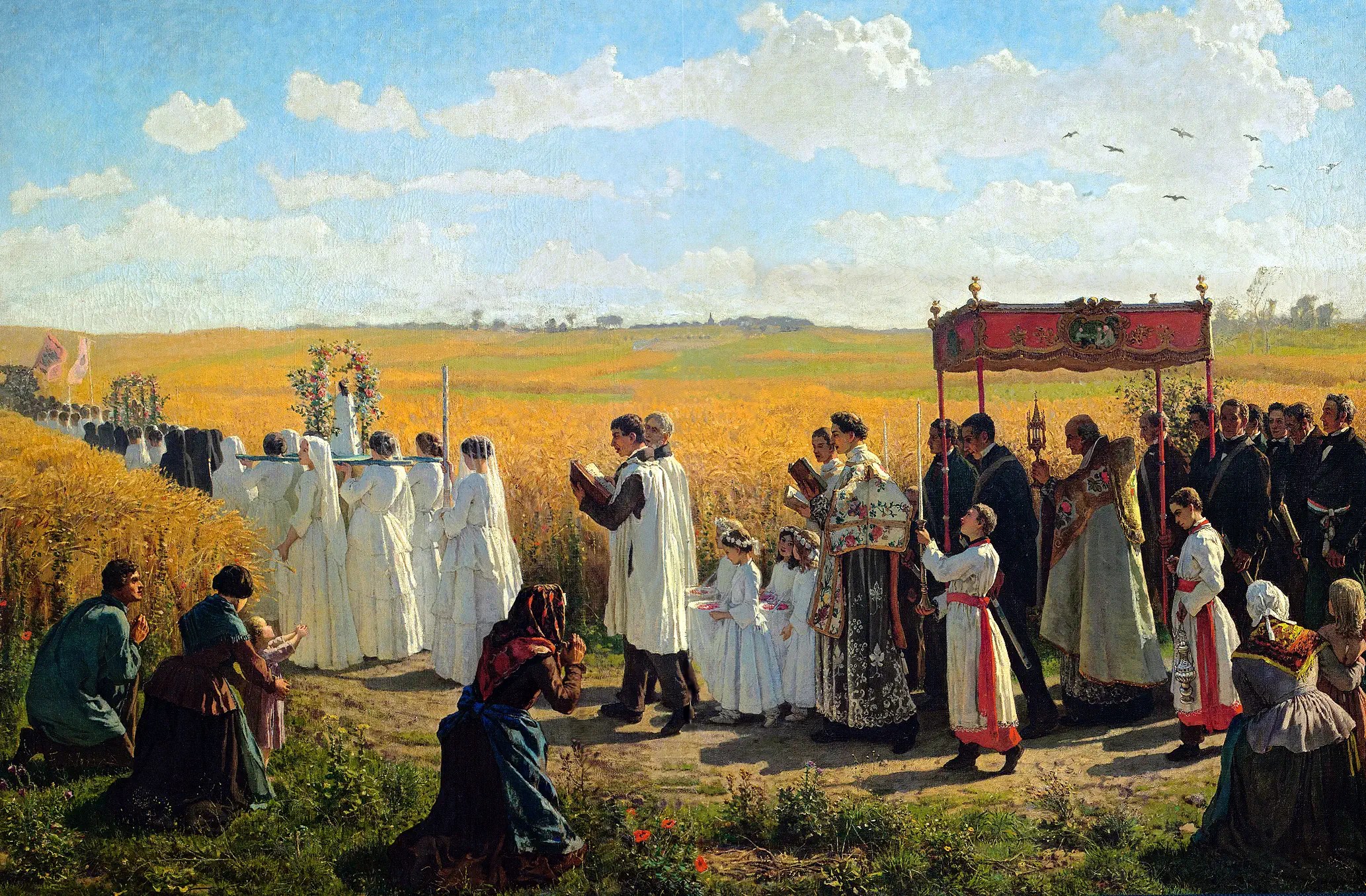
In 2009, an unnamed seminarian conducted an experiment with an unconsecrated host demonstrating how many particles of the Eucharist fall from the host when received in the hand. (Reprinted with kind permission).
Quote:
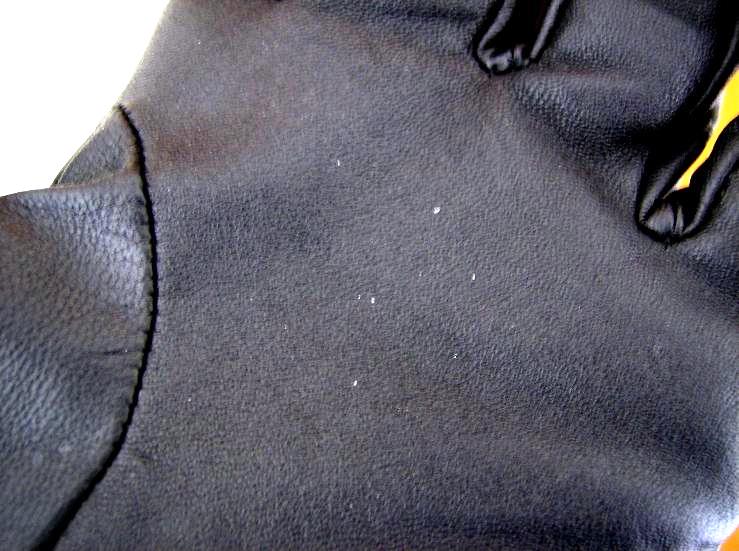
“I recently saw the “black glove test” photos that you posted on your blog, and read some of the objections some people had to the experiment (felt glove, possibility of lint beforehand, etc.).
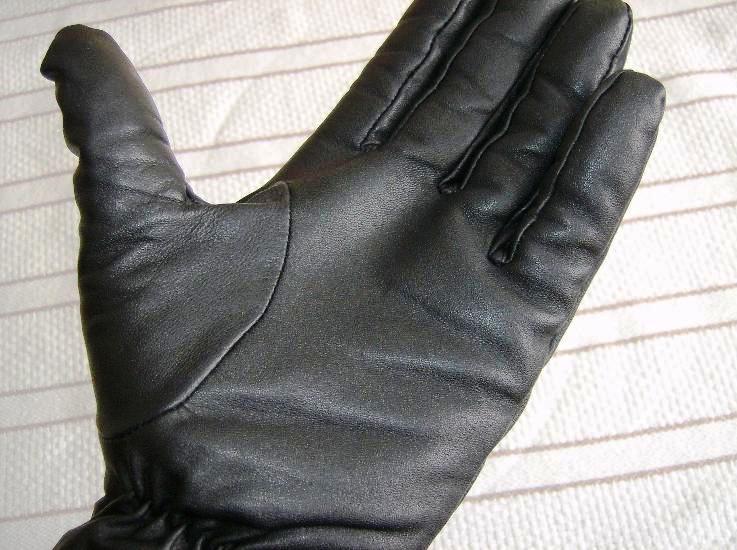
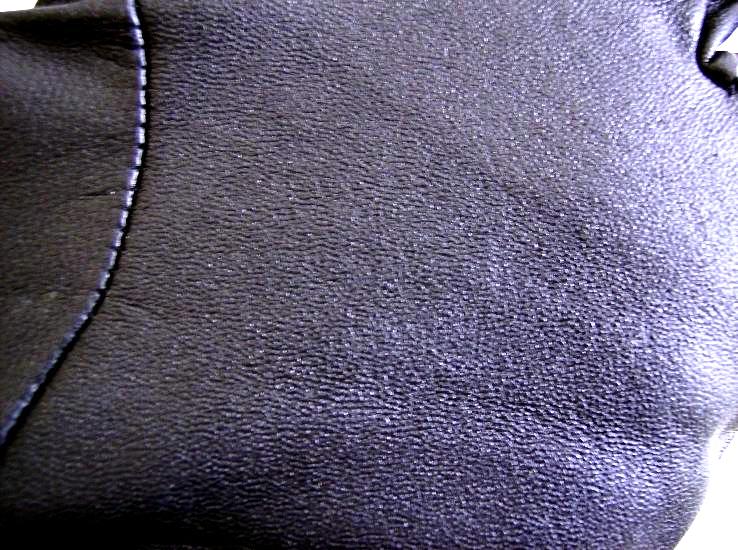
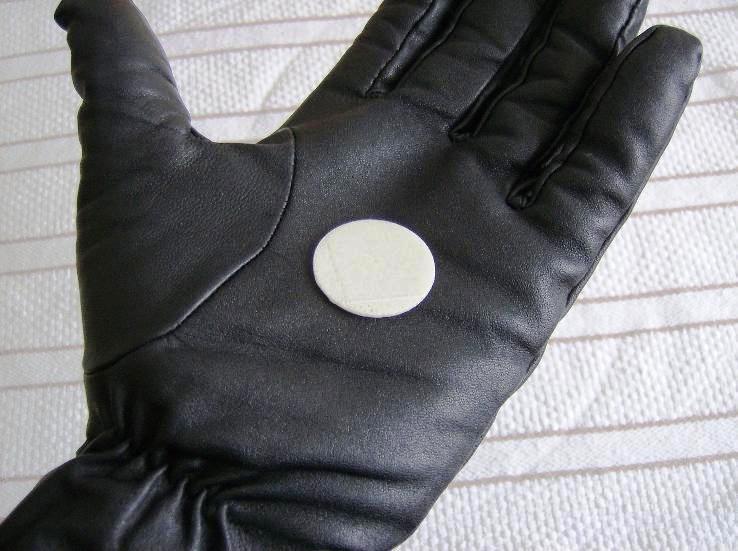
To help settle the issue, I performed a similar experiment using clean, black leather gloves. I’ve attached “before” and “after” photos of the results. For those interested in my experimental method, I observed the following points:
1. I performed the experiment three times.
2. Before each trial I ensured that the glove was free of any lint or other contaminant particles.
3. I gently placed a new, unconsecrated host in the palm of the glove. I tried to reproduce the distribution of communion in the hand that one generally sees at mass, both in placing the host in the hand, and removing it several seconds afterwards. I did not use excessive force, or rub the host against the glove in any way.
4. The results from all three trials were very similar, with four to ten particles of bread clearly visible to the naked eye.
Here are the photos sent by the seminarian who conducted the experiment.
BEFORE, DURING and AFTER:
In the same year, a more complete study was conducted by anonymous priest, ‘Fr. X’. His findings were printed in The Latin Mass Magazine and have been reprinted here, with kind permission.
Losing Fragments with Communion in the Hand:
Estimating the Problem with Unconsecrated Hosts…
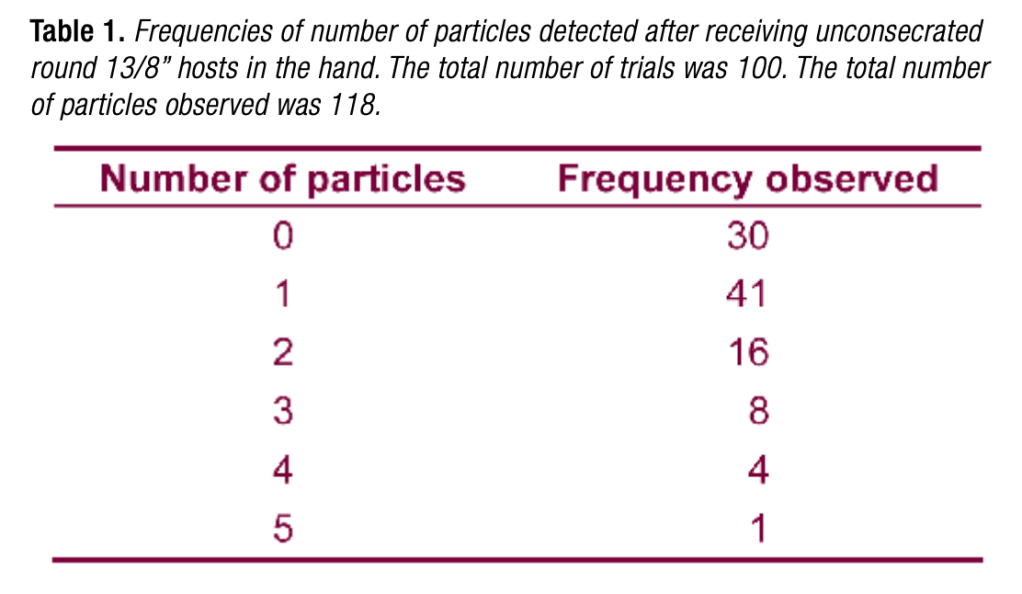
While there is considerable concern about losing fragments of the Eucharist after receiving Communion in the hand, there is little data regarding the scope of this problem. I conducted a study with two types of unconsecrated hosts to estimate the average number of visible fragments after Communion in the hand. Receiving and handling 13/8″ round whole wheat altar breads was associated with at least one fragment in 70 of 100 cases, with an average number of particles of 1.18. Receiving and handling pieces derived from large 53⁄4″ large whole wheat altar breads with impressed lines for easy breaking was associated with at least one fragment in 100 of 100 cases, with an average number of particles of 2.94. I conclude that Communion in the hand is likely to be associated with a substantial loss of fragments. Therefore, Communion on the tongue, which is devoid of this risk, should be considered. I also briefly discuss the potential for infection with Communion in the hand. In March 2009, two experiments involving unconsecrated hosts placed on black gloves were reported on the blog What Does the Prayer Really Say.1,2 The number of particles clearly visible on the gloves prompted numerous comments questioning the prudence of the practice of Communion in the hand. Objections to the experiments, such as the suitability of felt gloves, of of gloves in general, were raised, and the number of counts ranged from reporting the results from only a single incident to a trial of three instances. Hence, it was thought that a more rigorous scientific study, using conditions approximately more closely the actual reception of Communion in the hand, and a higher number of observations to give a better estimate of the problem would be of use to the entire Church.
Here I report the results of 200 instances approaching as nearly as possible the reception of Communion in the hand; unconsecrated hosts were, of course, used. One hundred trials were made using small, round hosts, and another 100 trials were made using the pieces from large hosts, manufactured with impressed lines so that they can be broken easily into 24 parts. Both kinds of host are commonly used in parishes in the United States.
For the purposes of this study, only particles visible to the naked eye are reported; such particles must be safeguarded if real sacrilege is to be avoided. I believe this criterion would certainly be required for a “reasonable reverence” for the Mystery of Transubstantiation; one which seeks to balance the care and attention due Our Lord most truly present in even the smallest particle of the Most Blessed Sacrament, while at the same time avoiding the pitfalls of scrupulosity.3
METHODS
One hundred 1 3/8″ round whole wheat altar breads (Group A), and 100 pieces from five 5 3/4″ large whole wheat altar breads with impressed lines for easy breaking into 24 pieces (Group B) were prepared in two separate bowls. All altar breads were produced by the Cavanagh Company (Greenville, Rhode Island), which, according to the company’s website, provides 85 percent of the altar breads in the USA and Canada.4 Given the basic recipe and modern techniques, I expect the results obtained in this study to be representative of the results that would be found with other brands of altar breads. The hands of the person distributing the altar bread and the hands of the person receiving the altar bread were thoroughly washed, dried, and examined to ensure no stray objects were present which could be mistaken for particles. A piece of black cloth was prepared, so that any particle could be brushed onto the cloth from the palm or fingers of the person receiving the altar bread for easier confirmation of its presence.
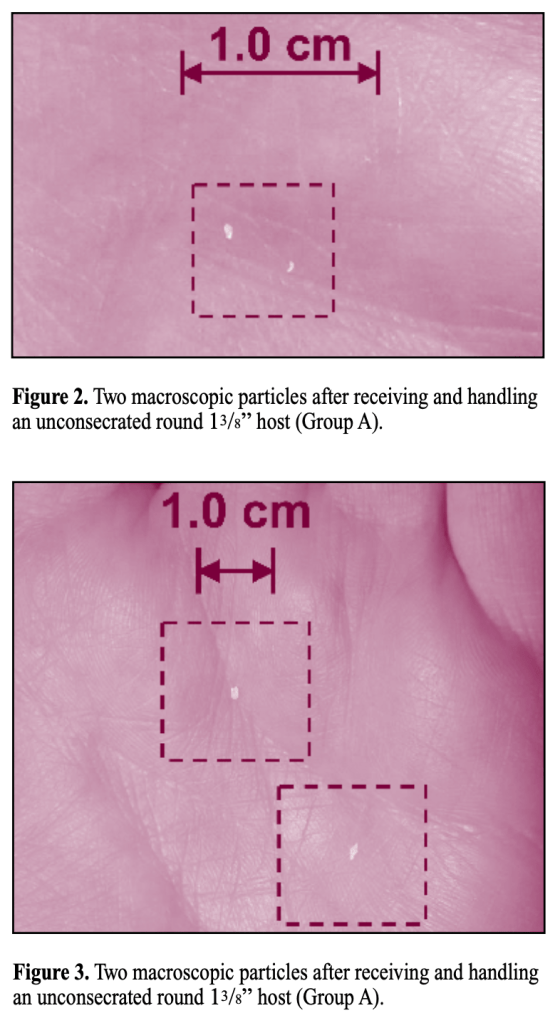
Next, the person distributing the altar bread placed one unconsecrated host on the palm of the person receiving the altar bread. The person receiving the altar bread picked up the unconsecrated host in a pile to be discarded. Then, the palm, thumb and index finger of the person receiving the altar bread were examined for particles. Observations were made under bright lighting conditions. The person distributing, the person receiving, and a third observer came to a consensus regarding if and how many particles were present, and the results were recorded. To ensure accuracy, when particles were observed on the palm or the thumb or index finger, they were then brushed onto a black cloth and their presence confirmed. This procedure was then repeated for all of the altar breads on Group A and Group B. Please note that it is to be presumed that the person distributing the altar bread would not lose particles, since his fingers should be properly purified after distribution was complete if he had actually been distributing Holy Communion. For some of the observations digital photographs were taken (Canon PowerShot S5 IS Digital Camera – 8 Megapixel).
RESULTS
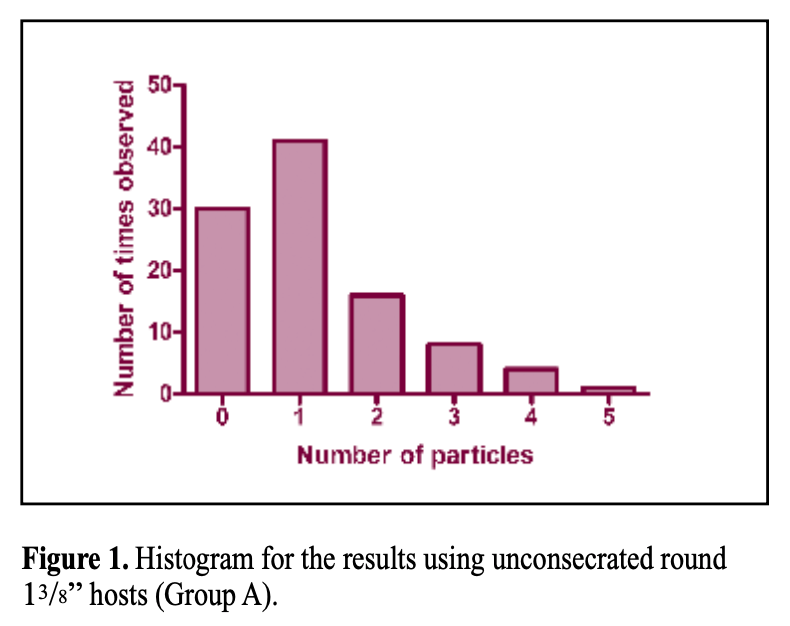
For Group A, results are shown in Table 1 and Figure 1. The number of particles left on the palm, thumb or index finger of the person receiving the altar bread from Group A ranged from zero to five, with an average of 1.18 (median: 1) particles. At least one particle was observed in 70% of instances. Figure 2 and Figure 3 show photographs of particles remaining on the palm after two instances of receiving a host from Group A.
For Group B, results are shown in Table 2 and Figure 4. The number of particles left on the palm, thumb or index finger observed for Group B ranged from one to nine, with an average of 2.94 (median: 2.5). It should be noted that in 100% of instances there was at least one particle observed for this group.
DISCUSSION
I report that after approximating Communion in the hand with unconsecrated hosts, microscopic fragments on the hand could be detected in 70% of observations with small, round hosts, and in 100% of observations with hosts obtained from large hosts with impressed lines. These results are far from surprising and are consistent with what can be observed by anyone who has been involved with the purification of fingers or the sacred vessels after distributing Holy Communion. Since the accidents, i.e. the physical properties, of bread remain after Transubstantiation, the results of this study should be identical to what one would observe for the actual reception of Communion in the hand.
At Mass, it is seldom observed that communicants, after receiving the Eucharist in the hand, check their palm, thumb and index finger for particles of the Sacred Host. Given the findings of this study, it can therefore be assumed that a substantial number of particles fall to the floor and are lost as a direct result of the practice of receiving Communion in the hand.
Importantly, with Communion on the tongue an alternative is available which does not endanger particles of the host. Of note. in the name of preventing the spread of infectious diseases, most Bishops in the United States have been promoting the practice of Communion in the hand over Communion on the tongue. This is surprising, since, to the best of my knowledge, no scientific study has linked the practice of receiving Communion on the tongue with a higher risk of infection. In fact, the opposite may be true. If Communion is distributed on the tongue properly, there should be no contact between the Priest’s fingers and saliva from the tongue of the recipient. In contrast, touching a church door handle, pew, or hymnal and shaking hands are all possible sources of hand contamination, so that the communicants’ hands are potentially covered with viruses when they receive Communion in the hand. Thus, recommending this mode for infection control may be well-intentioned but appears counter-intuitive and potentially counterproductive.
CONCLUSIONS
Based on my findings, I recommend receiving Communion on the tongue. Those who receive Communion in the hand should check diligently their palms, thumbs and index fingers for particles and consume those particles. In times of epidemic, one should consider Spiritual Communion is one is at high-risk of developing complications with infection.
Finally, given that the practice of Communion in the hand, as this study suggests, does not adequately safe guard the Eucharist, it may be prudent for those in authority in the Church to re-evaluate whether Communion on the tongue should again become the norm of receiving Our Lord in the Eucharist. This is especially the case as no extenuating circumstances that justify taking such a risk appear to be present. ✠
Notes
- Father John Zuhlsdorf, What Does the Prayer Really Say, “Poll: Communion in the Hand.” March 15, 2009, http://wdtprs.com/blog/2009/03/poll-communion-in-the-hand/ (accessed August 23, 2009).
- Father John Zuhlsdorf, What Does the Prayer Really Say, “Hand in Glove 02-Another Communion in the Hand Experiment.” March 17, 2009, http://wdtprs.com/blog/2009/03/hand-in-glove-02-another-communion-in-the-hand-experiment/ (accessed August 23, 2009).
- J.B. O’Connell, The Celebration of Mass (Milwaukee: The Bruce Publishing Company, 1964), pp 185, 289-292.
- The Cavanagh Company. http://www.cavanaghco.com/acatalog/Cavanagh-History.html (accessed August 23, 2009).
- Source: The Latin Mass Magazine
Father X is a Priest and former chemist who lives and works in both Europe and the United States.

BOOKS
The Real Presence – Fr. Buckley FSSP
The Blessed Eucharist: Our Greatest Treasure – Fr. Michael Mueller
EXPLORE
Affirmation of Faith
St. Paschal Baylon, Seraph of The Eucharist
About
The Experiment
International Crusade of Eucharistic Reparation
The Eucharistic Fast & Law of Abstinence
Reception on the Tongue, Kneeling
Received and Not Owed
Behavior in Church
Communion Bread Making
Thoughts on the New Rite of Mass
Spiritual Communion
Quas Primas
Pange Lingua
Contact
Send Prayer Request
©2026 REALPRESENCE.INFO.
 THE REAL PRESENCE